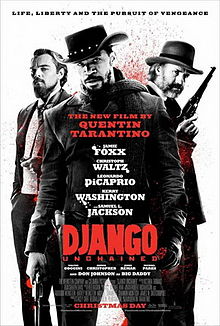
 Tarantino’s best film since Pulp Fiction – there’s a remote chance the Academy might throw him a bone on this one since they snubbed him in 1994 in favour of the interminably bad Forrest Gump (anyone remember that one?) However, not impressed that Quentin is copying JJ Abrams – all this lens flare everywhere, offing his cameo character in the same way as Ilana Verdansky (Jacob’s bounty hunter follower on Lost), plus random guys with Australian accents in the 19th century American deep south are the new Star Trek redshirts …
Category Archives: Passive Media
Django Unchained (2012, dir. Quentin Tarantino): QT’s best since Pulp Fiction
Les Miserables (2012, dir. Tom Hooper): Occupy the Oscars!
 “Occupy the Oscars!” Tom Hooper’s movie of the British staging of the French musical of the 1862 Hugo novel is a must-see for anyone who appreciates epic stories, contemporary musicals or well-crafted cinema in general. Warning for those who are not already fans of the musical: some effort is required to enjoy this masterpiece, not unlike the attention needed for a screening of Jackson’s LOTR trilogy, but still much less than a classical opera.
Hooper has chosen a straight up-and-down adaptation, with the only risk he’s taken to have the actors sing “in scene” (not lip-synched). In general this works well, but the trade-off is that the soundtrack will not be a perfect concert-hall recording – though combined with the excellent on-screen acting and cinematography, it’s suitably epic and powerful. Anne Hathaway’s Fantine is deserving of a Best Supporting Actress gong on the strength of her show-stopping solo. Hugh Jackman’s Valjean is a solid contender for Best Actor, and newcomer Eddie Redmayne’s Marius impresses. On the other hand, Russell Crowe’s Javert is merely serviceable. And Sacha Baron Cohen and Helena Bonham Carter’s comic Thénardiers were unexpectedly understated.
My only (admittedly minor) quibbles are that Hooper could have taken more creative risks. E.g. musically, Samantha Bark’s Eponine numbers might have gone more jazzy/soul, and the requisite new-song-for-the-film ‘Suddenly’ sounds manufactured for a Best Original Song nod by taking inspiration from past syrupy Disney/Pixar winners. On the staging front, they could have changed up on the repeated close-ups of every soloist’s tonsils (yes we get it, they’re not lip-synching), and the entr’acte CGI tracking shots up into the air and down again.
Life of Pi (2012, dir. Ang Lee): cements Lee as one of the most versatile directors of our generation
 Triumphant adaptation of the Man Booker Prize winning novel, Life of Pi works both for kids as a high seas survival adventure (plus Bengal tiger), and for adults, a meditation on the porous boundary between faith and imagination. e.g. Miss 3yo’s verdict: “It was better than Diego!” Certain to attract a host of Oscar noms, including the majors and the technicals (for the 3D effects).
Cements Ang Lee as one of the most versatile directors of our generation, capable of taking on even ‘unfilmable’ challenges, such as the Watchowski’s creditable take on Cloud Atlas earlier this year. I wonder if he’s on the shortlist for SW7-9? 🙂
Lincoln (2012, dir. Steven Spielberg): an historical “West Wing”
 An historical “West Wing”. Focuses the action on the political drama around getting the House to pass the Thirteenth Amendment during January 1865, abolishing slavery before the Civil War ended and the moment passed. Brilliant Oscar-worthy performance by Daniel Day-Lewis, and an occasionally sparkling script based on historian Doris Kearns Goodwin’s “Team of Rivals: The Political Genius of Abraham Lincoln”
O how the Republican party has fallen! Spielberg showcases its glorious beginnings as the party of Lincoln: socially progressive, concerned with long-run social justice and economic prosperity (some rich people would lose big, and states’ rights would be trodden on, but that was not an issue), open to compromise and willing to put aside ideology to move the ball forward. If the Republicans of today can recapture this spirit and be inclusive of all 100%, they can start winning elections handily and keep Democrats on their toes.
Skyfall (2012, dir. Sam Mendes): Bond’s 23rd outing makes up for Daniel Craig’s 2nd
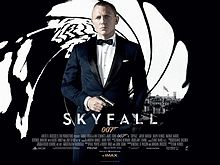 Daniel Craig’s 3rd outing makes up for Quantum of Solace: it continues the rebooted series’ emphasis on a gritty, more vulnerable Bond, delving into aspects of his (and supporting characters’) origins, while also bringing back a little of the fun of pre-Craig Bonds (e.g. the cheesy one-liners, the familiar theme music, etc.) The not-so-good: Javier Bardem’s villain has an interesting setup but is reduced to a vanilla bad guy in the finale, the middle act meanders somewhat, and there are some inexplicable plot holes (e.g. if Q can control the tube why not just stop the train with Javier in it?) But overall, enjoyable entertainment for fans of Bond and action thrillers generally
Flight (2012, dir. Robert Zemeckis): compelling character study of a compromised captain
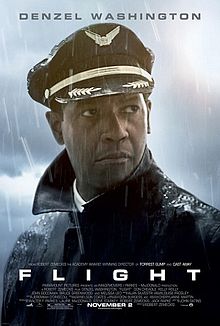 Compelling drama that opens with the protagonist pilot (Denzel Washington) saving most of the passengers from a catastrophic plane crash, and then shows the audience the real plane wreck: a riveting study of the pilot’s compromised character. Denzel’s best role in a long while, he will surely be nominated for an Oscar. Plus, Lance Armstrong could have done with legal counsel like Don Cheadle’s 🙂
Cloud Atlas (2012, dir. Lana & Andy Wachowski & Tom Tykwer): flawed, ambitious, impressive adaptation of David Mitchell’s Booker runner-up
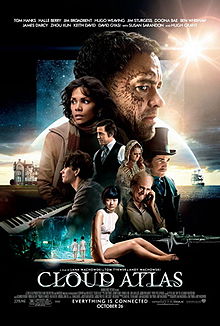 An ambitious and impressive adaptation of the complex Booker runner-up novel by David Mitchell that intertwines six stories across genres and time periods. More successful than other recent oeuvres with epic metaphysical sweep (e.g. Malick’s “The Tree of Life” or Aronofsky’s “The Fountain”): partly due to the Wachowski siblings’ sci fi action pedigree, it avoids getting bogged down. If anything it feels like Nolan’s “Inception”, including having so much plot to get through that there’s scant time to connect emotionally with all the characters. As in the book, I still don’t get the point of the second (1936) sequence; it doesn’t thematically link to the other stories, and as far as I can tell only exists to explain the title (the movie would likely have been improved by excising it). Instead, they cut the fun, satirical consumerist language of the 5th (2144) sequence, e.g. “putting on your nikes to get in your ford to go for a starbuck”. And if you found JGL’s makeup distracting in “Looper” you won’t be able to focus at all in most scenes … Otherwise, if film-making writ large appeals to you at all, Cloud Atlas is a highly worthwhile 3 hour event.
Lost (2004-2010 TV series, by JJ Abrams, Jeffrey Lieber and Damon Lindelof) – a grand unified plot theory?
 I know we’re 2 years behind, but we finally watched all 90-100 hours of LOST and I can now offer up this ‘grand unified theory’ to explain the 6-season story. (It’s high-concept modern myth-making; the only other recent show to have done this well is BSG.)
Synopsis: 2,000 years ago, Jacob unwittingly unleashes the Devil (‘Smokey’) upon the Island, which is the physical manifestation of Hell on earth. While Smokey seeks to escape the Island and wreak havoc upon the world, Jacob’s plan is to bring a series of ‘half-damned souls’ to the Island in the hope that they can redeem themselves and each other to somehow defeat Smokey. Even though Smokey finds a way to murder Jacob, his final set of ‘candidates’ – the survivors of Oceanic flight 815 – eventually discover their purpose and succeed at their task at great self-sacrificial cost, and are rewarded by reuniting as eternal friends in the after-life
Looper (2012, dir. Rian Johnson): Terminator for the millennial generation
 High-quality, intelligent sci-fi action movie, feels like a modern update of Terminator, with Bruce Willis as an aged time-travelling killer instead of Arnie’s relentless robot, Emily Blunt as the protective mother, etc. Wlil probably not achieve the cultural impact of T1/T2, but recommended viewing nonetheless for fans of smart thrillers
Chinglish (2011, play by David Henry Hwang): cleverly written comedy of cultural errors
 Cleverly written comedy exploring cultural differences between China and the US – business, relationships, language, etc. Hilarious dialogue, plot foreshadowing and twists – and despite half the play being in subtitled Mandarin, the mostly Caucasian audience was in stitches by the climactic ‘courtroom’ scene. Good stuff

 WetWareGames